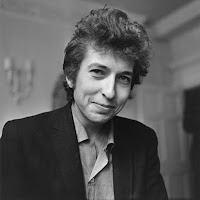
Buddy Miles discography [1968-2008]

 
Best known as the drummer in Jimi Hendrix's Band of Gypsys, Buddy Miles also had a lengthy solo career that drew from rock, blues, soul, and funk in varying combinations.

Born George Miles in Omaha, NE, on September 5, 1947, he started playing the drums at age nine, and joined his father's jazz band the Bebops as a mere 12 year old. As a teenager, he went on to play with several jazz and R&B outfits, most prominently backing vocal groups like Ruby & the Romantics, the Ink Spots, and the Delfonics. In 1966, he joined Wilson Pickett's touring revue, where he was spotted by blues-rock guitarist Mike Bloomfield. Bloomfield had left the Paul Butterfield Blues Band earlier in 1967 and was putting together a new group, the Electric Flag, which was slated to be an ambitious fusion of rock, soul, blues, psychedelia, and jazz. Bloomfield invited Miles to join up, and the band made its debut at the Monterey Pop Festival; unfortunately, the original lineup splintered in 1968. With founder Bloomfield gone, Miles briefly took over leadership of the band on its second studio album, which failed to reignite the public's interest.

With the Electric Flag's horn section in tow, Miles split to form his own group, the similarly eclectic Buddy Miles Express. Signed to Mercury, the group issued its debut album, Expressway to Your Skull, in 1968, with Miles' fellow Monterey Pop alum Jimi Hendrix in the producer's chair. In turn, Miles played on Hendrix's Electric Ladyland album, and later took part in an all-star jam session that resulted in Muddy Waters' Fathers and Sons album. Hendrix also produced the Miles Express' follow-up, 1969's Electric Church, and disbanded his backing band the Experience later that year; shortly afterward, Hendrix, Miles, and bassist Billy Cox formed Band of Gypsys, one of the first all-black rock bands. Bluesier and funkier than Hendrix's previous work, Band of Gypsys didn't last long in its original incarnation; Miles departed in 1970, replaced by Experience drummer Mitch Mitchell, but not before his powerhouse work was showcased on the group's lone album, the live Band of Gypsys.

After backing John McLaughlin on 1970's Devotion, Miles returned to the role of bandleader and recorded his most popular album, Them Changes, in 1971; it stayed on the charts for more than a year, and the title cut became Miles' signature song. From December 1971 to April 1972, Miles toured with Carlos Santana, which produced the CBS-released concert document Carlos Santana & Buddy Miles! Live!; recorded inside an inactive volcano in Hawaii, the album sold very well, climbing into the Top Ten. Miles cut a few more albums for CBS, participated in a short-lived Electric Flag reunion in 1974, then moved to Casablanca in 1975 for a pair of LPs. Aside from a one-off album for Atlantic in 1981 (Sneak Attack), Miles kept a low profile over the next decade, partly to battle personal problems.

Miles returned in 1986 as the lead voice in a TV ad campaign that featured clay-animated raisins singing "I Heard It Through the Grapevine"; the ads proved so popular that a kid-friendly musical franchise was spun off, and thus Miles became the lead singer of the California Raisins, performing on two albums (mostly R&B covers) and a Christmas special. Additionally, Miles rejoined his old friend Carlos Santana as the official lead vocalist of Santana during part of the late '80s, making his studio debut on 1987's Freedom. In the early '90s, Miles played with Bootsy Collins (both solo and as members of Hardware), and in 1994 he formed a new version of the Express and recorded Hell and Back for Rykodisc. Miles Away From Home followed in 1997 on Hip-O. Miles toured steadily through the '90s, and subsequently formed a more straightforward blues band called the Blues Berries with guitarist Rocky Athas; their first album, Blues Berries, appeared on Ruf in 2002.


Buddy Miles.1968- Expressway To Your Skull
Buddy Miles.1969- Electric Church
Buddy Miles.1970- Them Changes
Buddy Miles.1970- We Got To Live Together
Buddy Miles.1971- A Message To The People
Buddy Miles.1971- Live
Buddy Miles.1973- Booger Bear
Buddy Miles.1973- Chapter VII
Buddy Miles.1974- All The Faces Of Buddy Miles
Buddy Miles.1975- More Miles Per Gallon
Buddy Miles.1976- Bicentennial Gathering Of The Tribes
Buddy Miles.1977- Roadrunner
Buddy Miles.1981- Sneak Attack
Buddy Miles.1984- The Return Of The Band Of Gypsys (FM Radio Broadcast)
Buddy Miles.1991- Greatest Christmas Hits
Buddy Miles.1993- Tribe Vibe
Buddy Miles.1994- Hell And Back
Buddy Miles.1997 The Best Of Buddy Miles
Buddy Miles.1997- Miles Away From Home
Buddy Miles.1997- Tribute To Jimi Hendrix
Buddy Miles.2002- Blues Berries
Buddy Miles.2006- The Band Of Gypsys Return
Buddy Miles.2008- Food For The I

Carlos Santana & Buddy Miles-(1972)-Live!
Hardware-(1994)-Third Eye Open
Santana & Buddy Miles-(1997)-Viva Percussion

Rory Gallagher - Kickback City [3 CD, 2013/FLAC]

 
Kickback City is a compilation of crime noir inspired music from Rory Gallagher that is a perfect marriage of content and presentation.

Three CDs come packaged in a glossy bookset, featuring The Lie Factory, an exclusive new ‘novella’ by Ian Rankin. The story comes stunningly illustrated in full graphic novel style by Timothy Truman. The first disc here features a selection of 14 studio recordings from the late rock-blues guitarist (see track listing below), with a second CD offering a selection of live performances. The third disc has actor Aidan Quinn narrating Ian Rankin’s story. The set also includes four glossy Lie Factory postcards.

The presentation is truly fantastic, and the whole crime novel concept works beautifully. In an age of cost-cutting and budget reissues, you have to admire conviction with which this set has been produced. It’s sure to attract a new audience to the talents of the Irish musician, and we it is a commercial success, in the hope that it encourages record labels to match these high standards with their reissues.


VA - New Orleans Guitar (4 CD, 2006/FLAC)


New Orleans of a hundred years ago teemed with a host of pianists playing blues and boogie in establishments both legal and recreational. Then came the guitarists. Here’s one: ‘You ought to have heard Smiley Lewis in person – he made the walls rattle!’ said drummer Earl Palmer. 

Lewis was born in July 1913 in DeQuincy, LA. His mother may have died while he was young – a sister-in-law recalled the family moving to West Lake, LA, where he was raised by a stepmother. Somewhere in his teens, he took up the guitar. Then he ran across trumpeter Thomas Jefferson’s band which he joined. ‘(He) always was a good entertainer,’ Tuts Washington remembered. ‘He sang the blues and all of them sentimental numbers. He would walk off the bandstand and sing to the people in the audience. See, Lewis had a voice so strong he could sing over the band, and that was before we had microphones.’ During WW2, Lewis found work where he could – ending up in a band with Tuts. At the end of the war, the band split up but Smiley and Tuts recruited drummer Herman Seale to form a blues trio. ‘We had the hottest trio in town,’ Washington boasted. They also hung around J&M Records. The following year, the New York label DeLuxe came to record local talent, using J&M as a source. When DeLuxe returned in September 1947, Lewis’ trio was one of the acts he decided to record. No copy has ever turned up. Although popular around New Orleans, Smiley’s record failed on the national market. He was dropped by DeLuxe. Nevertheless, his status as a recording artist ensured that Smiley’s trio was in demand around Louisiana and for some months they had a residency at the Cinq Sou Hall, next door to the Dew Drop Inn. Occasionally, he would drop into the Dew Drop to make guest appearances with Dave Bartholomew’s orchestra, billing himself as ‘the drifting blues singer’. As with most of the other artists here, Lewis had a life of ups and downs (his ‘One Night’ was cut by Presley). He died in 1966.


Peter Banks / Flash / Empire discography [1973-2020]


 Born July 15, 1947, in Barnet, Hertfordshire, England, Peter Banks was perhaps best known for his work with the progressive rock band Yes. Those who only see that part of the picture, though, are missing out on quite a lot. Banks first got his start with Yes bassist Chris Squire in the group the Syn. That group made a bit of a name for itself in England from 1966 to late 1967. Squire and Banks moved to their next group after the Syn disbanded, the band Mabel Greer's Toy Shop. Banks left that group at about the time vocalist Jon Anderson was starting to become a presence on the scene, and it would only be a matter of time until they would work together. Banks went to play for a short time with Neat Change.

As fate would have it, though, he hooked back up with Squire and Anderson's Toy Shop. By then, they had added Tony Kaye and Bill Bruford to the lineup and were just ready to embark on a new name for the outfit. The new name and Peter Banks' return were nearly simultaneous, and Yes was born. The group released two albums with Banks. The first of those was the self-titled debut that came out in 1969, the second album was Time and a Word, released in 1970. By that time, the group had decided that Banks was not really the guitarist for the band and replaced him with Steve Howe. Banks thus found himself without a musical home.

Undaunted, he formed Flash, a prog band that seemed to carry on in the mode that Yes might have gone had Banks remained. As fate would have it, keyboardist Tony Kaye was the next to feel the growing pains of Yes, and upon his exit from the group he hooked up with Flash. The band released its debut, Flash, in 1972. They followed it in rapid-fire succession with In the Can (also released in 1972) and Out of Our Hands (1973). A live album, originally a bootleg, surfaced many years later under the moniker of Psychosync. Flash disbanded in 1973 and Banks released his first solo album, Two Sides of Peter Banks, that year. The album featured a rather impressive lineup of Banks, fellow Flash members Ray Bennett and Mike Hough, Jan Akkerman, John Wetton, and Phil Collins. Banks' next endeavor was a group that began under the name Flash Mark II. After a time, though, they came to be called Empire. The band recorded a total of three albums before breaking up in 1980.

Banks was not heard from for quite some time, after the end of Empire. Indeed, his next release was the 1993 solo album Instinct. The album was a true solo effort, with Banks handling all of the instrumental chores. His next release, Self-Contained, came two years later with his only accompaniment being Gerald Goff on keyboards. Reduction was released in 1999; an album featuring older material by Banks, entitled Can I Play You Something?, was released in 2000. Peter Banks died of heart failure at his London home on March 8, 2013; he was 65 years old.


Bob Dylan - Bootleg series Vol. 1-17


1991  The Bootleg Series Volumes 1–3 (Rare & Unreleased) 1961–1991
1998  The Bootleg Series Vol. 4: Bob Dylan Live 1966, The "Royal Albert Hall" Concert
2002  The Bootleg Series Vol. 5: Bob Dylan Live 1975, The Rolling Thunder Revue
2004  The Bootleg Series Vol. 6: Bob Dylan Live 1964, Concert at Philharmonic Hall
2005  The Bootleg Series Vol. 7: No Direction Home: The Soundtrack
2008  The Bootleg Series Vol. 8: Tell Tale Signs: Rare and Unreleased 1989–2006
2010  The Bootleg Series Vol. 9: The Witmark Demos: 1962–1964
2013  The Bootleg Series Vol. 10: Another Self Portrait (1969–1971)
2014  The Bootleg Series Vol. 11: The Basement Tapes Raw
2015  The Bootleg Series Vol. 12: The Best of the Cutting Edge 1965–1966
2017  The Bootleg Series Vol. 13: Trouble No More 1979–1981
2018  The Bootleg Series Vol. 14: More Blood, More Tracks
2019  The Bootleg Series Vol. 15: Travelin' Thru, 1967–1969
2021  The Bootleg Series Vol. 16: Springtime in New York 1980–1985